
Modeling and Analytics for Predictive Systems
At MAPS Lab, we advance modeling and analytics for predictive systems through research spanning big data, data science, network science, and machine learning. Our work investigates complex phenomena through heterogeneous data and evolving structure at scale, combining computational modeling, data engineering, and multimodal data integration within unified frameworks. Our research focus on data-driven methods for prediction, monitoring, and decision support across complex and data-intensive domains.
Big Data
Data Science
Network Science
Machine Learning
About the Faculty
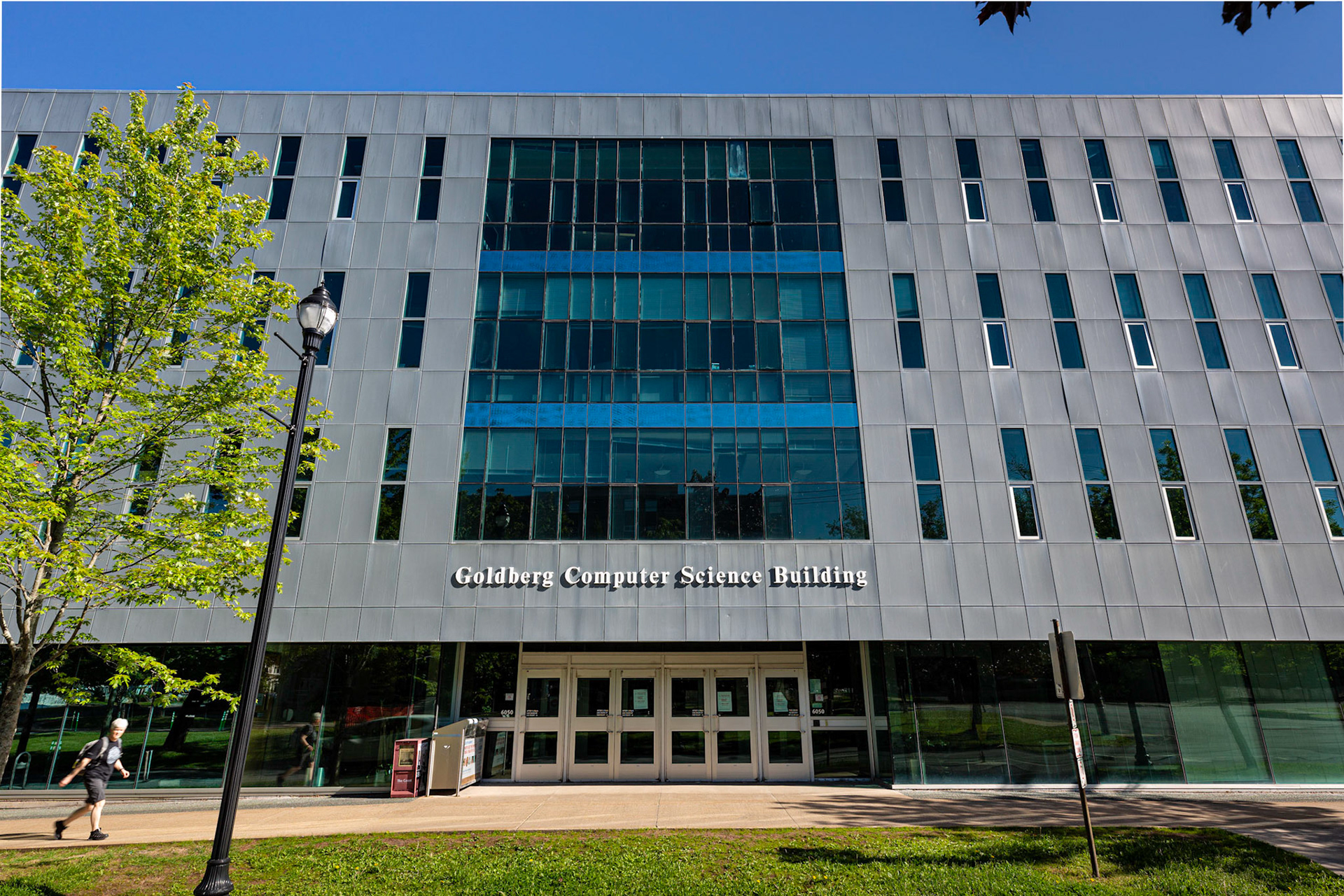
The Faculty of Computer Science - FCS at Dalhousie University - DAL was established in 1997 and is the leading information technology research and education institution in Atlantic Canada. Its research portfolio includes Big Data Analytics, Artificial Intelligence, Human-Computer Interaction, Visualization and Computer Graphics, Computer Systems, Algorithms & Bioinformatics, Networking, Security, and Computer Science Education. With around 70 faculty members, the FCS collaborates with national and international partners in sectors like oceans, defense, agriculture, and healthcare to tackle real-world challenges and promote innovation in computer science and its related fields.
Recent Publications
Gabriel Spadon, Ruixin Song, Vaishnav Vaidheeswaran, Md Mahbub Alam, Floris Goerlandt, Ronald Pelot (2025) Modeling Maritime Transportation Behavior Using AIS Trajectories and Markovian Processes in the Gulf of St. Lawrence 2025 IEEE International Conference on Big Data (BigData)
Gabriel Spadon, Oladapo Oyebode, Camilo M. Botero, Tushar Sharma, Floris Goerlandt, Ronald Pelot (2025) Community-Centered Spatial Intelligence for Climate Adaptation at Nova Scotia's Eastern Shore Proceedings of the 1st ACM SIGSPATIAL International Workshop on Spatial Intelligence for Smart and Connected Communities
Md Mahbub Alam, Jose F Rodrigues-Jr, Gabriel Spadon (2025) Multi-vessel Interaction-Aware Trajectory Prediction and Collision Risk Assessment arXiv preprint arXiv:2509.01836